
Modern flooring needs to do more than cover a concrete surface. In many commercial and industrial environments, the floor must also withstand traffic, spills, cleaning, and daily wear while maintaining an attractive appearance.
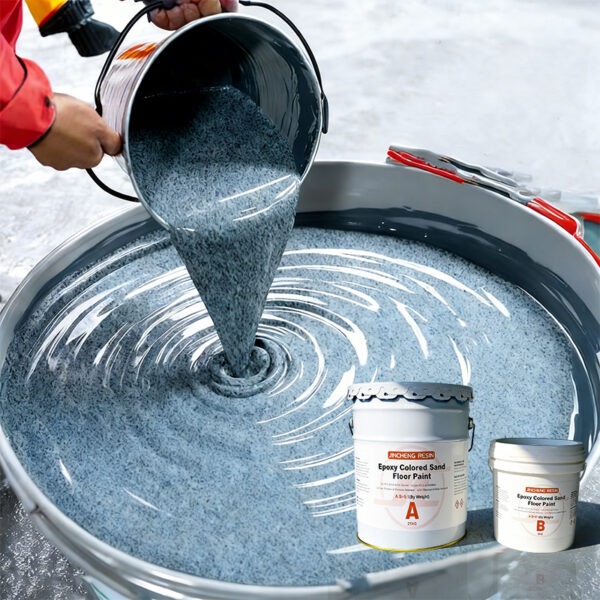
Epoxy systems combined with colored sand can provide both decorative and functional benefits. This type of flooring can create a textured, visually interesting surface while offering the performance characteristics associated with resin-based coatings.
What Is Epoxy Colored Sand Flooring?
Epoxy colored sand flooring combines epoxy resin with specially selected colored aggregate or sand.
The aggregate can create a decorative appearance while contributing to the texture and physical characteristics of the finished floor.
Depending on the formulation and installation method, the system may consist of several layers, including a primer, epoxy layer, colored aggregate, and protective topcoat.
Main Benefits
A properly designed epoxy colored sand floor coating can offer several advantages.
Decorative Appearance
Colored sand creates a distinctive finish that can be customized to suit different environments.
Durability
Epoxy systems can provide good resistance to everyday wear and abrasion when correctly formulated and installed.
Easy Maintenance
A properly sealed surface can be easier to clean than unfinished concrete.
Texture
The aggregate can provide additional texture, which may be useful in areas where slip resistance is an important consideration.
Where Is It Used?
This flooring system can be considered for a variety of environments.
Potential applications include:
- Retail facilities
- Commercial buildings
- Garages
- Workshops
- Showrooms
- Warehouses
- Industrial spaces
- Public facilities
The appropriate formulation should depend on the specific requirements of each location.
Surface Preparation
Preparation is one of the most important stages of installation.
The concrete should be free from dirt, grease, loose material, and other contaminants. Mechanical preparation methods may be used to create a suitable surface profile for bonding.
Cracks and damaged areas should also be addressed before the resin system is applied.
Application Process
Although exact procedures vary, a typical installation may involve several stages.
First, the concrete is prepared and cleaned. A primer may then be applied to improve adhesion.
The epoxy layer is applied according to the specified thickness, followed by the colored sand or aggregate.
After the system has cured sufficiently, excess aggregate may be removed and a protective topcoat can be applied.
Choosing Colors
Color selection is an important part of decorative flooring.
Multiple aggregate colors can be combined to create different visual effects. Neutral tones can provide a subtle appearance, while contrasting colors can make the floor more distinctive.
Businesses may also select colors that match their branding or interior design.
Is It Suitable for Heavy Traffic?
The suitability of a colored sand epoxy system for heavy traffic depends on its formulation, thickness, aggregate selection, substrate, and installation quality.
Industrial facilities should evaluate expected loads, vehicle traffic, impact, abrasion, and chemical exposure before selecting a system.
Maintenance Tips
Routine maintenance is relatively straightforward.
Regular sweeping removes dirt and abrasive particles. Periodic wet cleaning can remove accumulated grime.
Spills should be cleaned promptly, particularly when the substance may chemically interact with the coating.
Avoid using aggressive cleaning products unless they are confirmed to be compatible with the flooring system.
Final Thoughts
Epoxy colored sand flooring can combine decorative appeal with useful performance characteristics. Its customizable appearance and textured finish make it an option for commercial, industrial, and other demanding environments.
Successful results depend heavily on proper substrate preparation, suitable material selection, correct application, and regular maintenance.
