
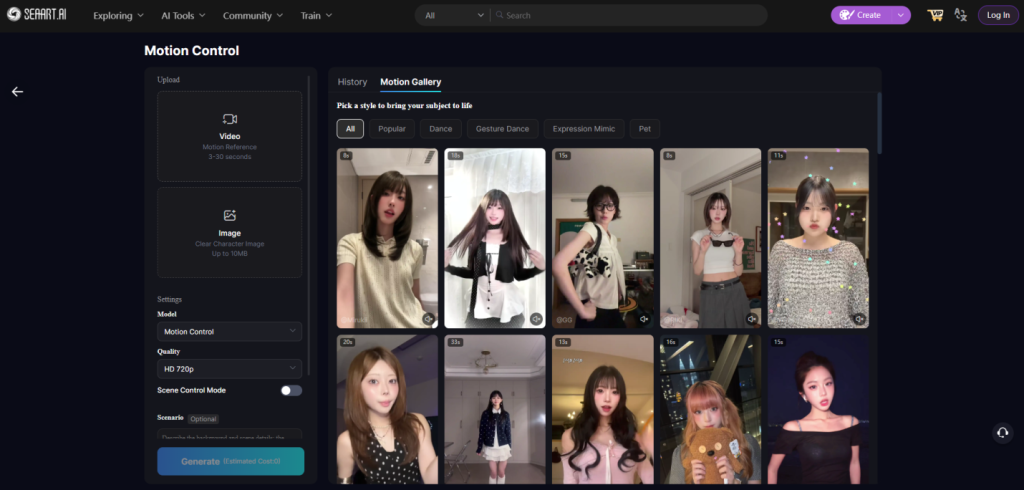
Motion Control AI is an advanced technology that combines artificial intelligence with mechanical control systems to manage and optimize movement in machines, robots, vehicles, and digital environments. Instead of relying only on fixed programming or manual control, motion control AI allows systems to learn, adapt, and respond intelligently to real-world conditions.
This technology is becoming increasingly important in robotics, automation, healthcare, gaming, transportation, and industrial production. It improves precision, reduces errors, and enables machines to perform complex tasks with minimal human intervention.
What Is Motion Control AI?
Motion Control AI refers to systems that use artificial intelligence to control movement dynamically. Traditional motion control relies on predefined instructions, but AI-based motion control uses data, sensors, and machine learning to adjust actions in real time.
In simple terms, it helps machines “think while moving.” Instead of following a rigid path, the system analyzes its environment and decides the best way to move or react.
For example, a robot using motion control AI can detect obstacles, adjust its path, and complete tasks more efficiently than a traditional robot.
How Motion Control AI Works
Motion Control AI systems rely on several key technologies working together:
1. Sensors and Data Collection
Sensors gather real-time information such as position, speed, pressure, distance, and environmental conditions.
2. Artificial Intelligence Processing
AI algorithms analyze the collected data to understand the situation and predict the best possible movement.
3. Machine Learning Models
These models help the system improve over time by learning from previous actions and outcomes.
4. Control Systems
The control system executes movement commands based on AI decisions, adjusting motors, wheels, or robotic joints.
5. Feedback Loop
Continuous feedback ensures that the system corrects itself and improves accuracy during operation.
This combination allows motion control AI to operate smoothly in complex and changing environments.
Applications of Motion Control AI
Robotics
Robots are one of the most important users of motion control AI. Industrial robots, service robots, and humanoid robots all use AI to move with precision, avoid obstacles, and complete tasks efficiently.
Autonomous Vehicles
Self-driving cars rely heavily on motion control AI to understand road conditions, detect pedestrians, and make safe driving decisions in real time.
Manufacturing and Automation
Factories use motion control AI to operate machinery, assemble products, and manage production lines with high speed and accuracy.
Gaming and Animation
In gaming and animation, motion control AI creates realistic character movements, physics-based interactions, and dynamic environments.
Healthcare Robotics
Medical robots use motion control AI for surgeries, rehabilitation devices, and patient care systems where precision is extremely important.
Benefits of Motion Control AI
Improved Precision
AI systems can control movement with extreme accuracy, reducing human errors and mechanical inefficiencies.
Real-Time Adaptation
Machines can instantly react to environmental changes without waiting for manual instructions.
Increased Efficiency
Automation powered by AI reduces time and effort in industrial and technical processes.
Enhanced Safety
Motion control AI helps prevent accidents by detecting hazards and adjusting movement accordingly.
Cost Reduction
Over time, AI automation reduces labor costs and operational expenses.
Challenges of Motion Control AI
Despite its advantages, motion control AI also faces several challenges:
- High computational requirements
- Dependence on large amounts of data
- Complex system design and integration
- Risk of errors in unpredictable environments
- Expensive initial setup costs
Developers continue to improve these systems to make them more efficient and reliable.
Motion Control AI in Everyday Life
Even though it sounds highly technical, motion control AI is already part of daily life. Examples include:
- Smart vacuum cleaners navigating homes
- Drones flying and stabilizing automatically
- Modern camera stabilization systems
- Smart factory machines producing goods
- AI-powered gaming controllers and systems
These examples show how deeply AI-driven motion systems are integrated into modern technology.
SeaArt AI: A Powerful Tool for AI Image Generation and Digital Creativity
SeaArt AI is a modern artificial intelligence platform designed for creating high-quality digital artwork from simple text prompts. It allows users to generate images, explore different art styles, and design creative visuals without needing professional drawing or graphic design skills.
As AI art tools become more popular, SeaArt AI has gained attention among artists, content creators, marketers, and hobbyists who want fast and easy access to creative image generation.
What Is SeaArt AI?
SeaArt AI is an AI-powered image generation system that transforms written descriptions into detailed visuals. Users simply type what they want to create, and the AI produces artwork based on that input.
For example, a prompt like “a cyberpunk city at night with neon lights and flying cars” can instantly be converted into a detailed digital illustration.
The platform uses deep learning models trained on large datasets of images and styles, allowing it to understand colors, textures, lighting, and composition.
How SeaArt AI Works
SeaArt AI operates using advanced machine learning and text-to-image technology. The process includes several steps:
1. Text Input
The user enters a description of the desired image.
2. AI Interpretation
The system analyzes the prompt and identifies key elements such as objects, style, mood, and environment.
3. Image Generation
The AI generates a new image based on learned patterns from millions of examples.
4. Refinement
The system enhances details like lighting, shadows, textures, and colors to improve image quality.
5. Output
The final image is produced and can be downloaded or edited further.
The Future of SeaArt AI
The future of SeaArt AI looks very promising. As AI technology evolves, we can expect:
- More realistic image generation
- Faster processing speeds
- Better customization options
- Advanced editing tools
- Improved understanding of complex prompts
These improvements will make AI art creation even more powerful and accessible.
Conclusion
SeaArt AI is a powerful and user-friendly platform that makes digital creativity accessible to everyone. By converting simple text prompts into detailed artwork, it helps users explore imagination, design visuals, and create content effortlessly.
Whether for social media, marketing, gaming, or personal projects, SeaArt AI offers a fast and efficient way to produce high-quality images. As artificial intelligence continues to advance, platforms like SeaArt AI will play a major role in shaping the future of digital art and creative expression.
