
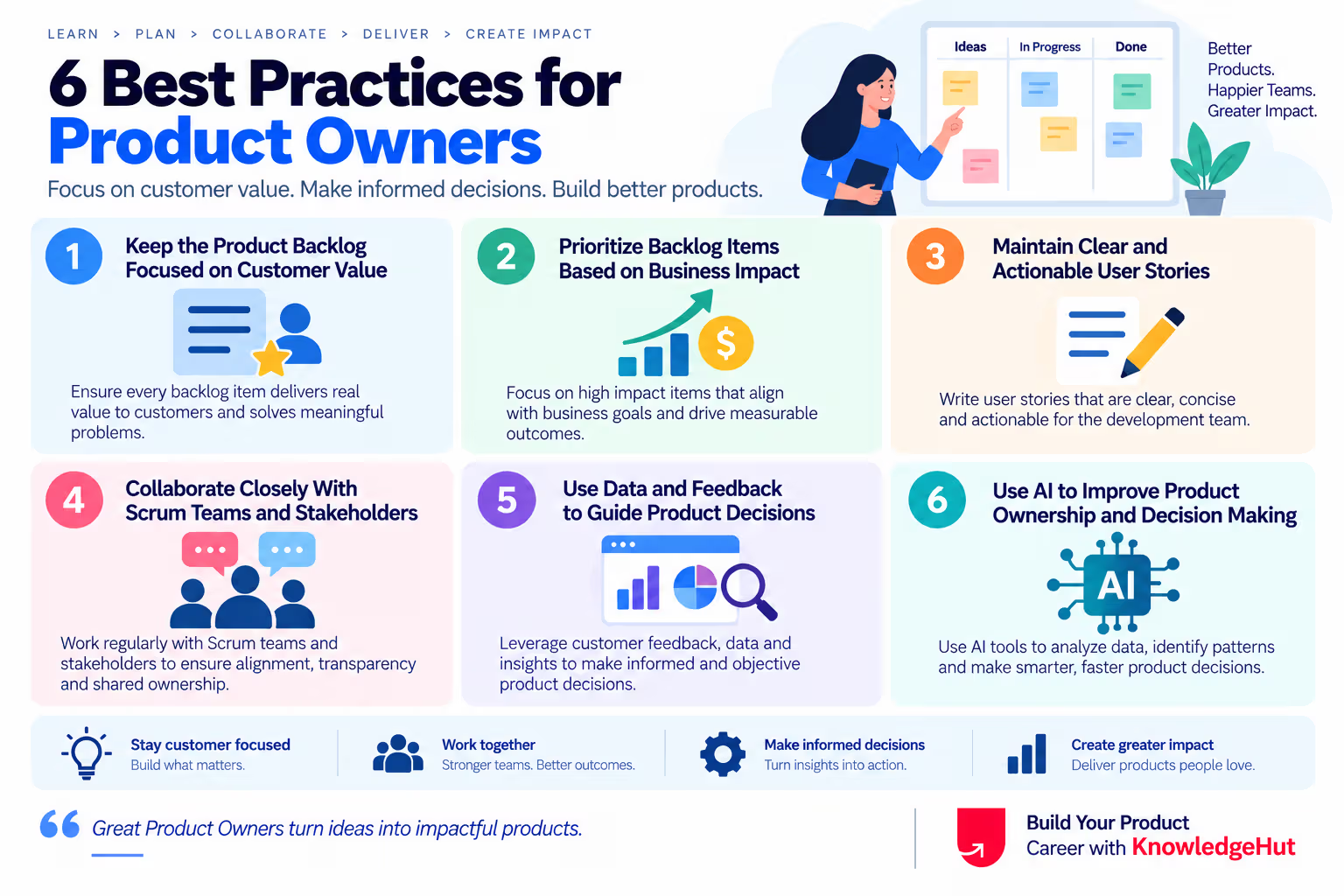
The role of the Scrum Product Owner is evolving faster than ever. By 2026, organizations expect Product Owners to go beyond backlog management and become strategic leaders who balance customer value, business outcomes, and emerging technology. If you want to stay competitive and deliver real impact, Start Your CSPO Certification Journey Today and build the foundation that keeps you relevant in a rapidly changing landscape.
At Simpliaxis, we see thousands of professionals every year transform their careers by mastering the right skills and pairing them with recognized certifications. The difference between a Product Owner who struggles and one who thrives often comes down to deliberate skill development combined with practical learning.
Why the Product Owner Role Demands More in 2026?
Remote and hybrid work, AI-assisted prioritization, tighter budgets, and higher customer expectations have raised the bar. Stakeholders no longer accept “we delivered the features.” They want measurable outcomes, faster learning cycles, and products that adapt in real time. A Product Owner who cannot speak the language of strategy, data, and continuous discovery risks being sidelined.
The good news is that the core skills required are learnable. Below are the capabilities that will separate high-performing Product Owners from the rest in 2026.
1. Strategic Product Vision and Outcome Orientation
Writing user stories is table stakes. In 2026, Product Owners must craft and continuously refine a product vision that connects daily work to long-term business goals. This means defining clear outcomes (not just outputs), measuring progress with leading indicators, and adjusting the vision as market conditions shift.
Strong Product Owners treat the vision as a living document. They communicate it repeatedly to the Scrum Team, stakeholders, and customers so everyone understands the “why” behind every backlog item.
2. Advanced Prioritization and Value Maximization
Backlog prioritization has moved beyond simple MoSCoW or ranking by gut feel. Modern Product Owners use evidence-based techniques such as Opportunity Scoring, Cost of Delay, and weighted shortest job first. They also incorporate AI-supported insights where available, while still applying human judgment on strategic fit and risk.
The ability to say “no” (or “not now”) gracefully, and to explain the trade-offs with data, becomes a critical leadership skill. Teams and stakeholders trust Product Owners who can defend prioritization decisions transparently.
3. Deep Customer Empathy and Continuous Discovery
Customer interviews, usability testing, and job-to-be-done analysis remain essential. In 2026, the best Product Owners run continuous discovery habits weekly rather than treating research as a one-time project phase. They combine qualitative insights with quantitative product analytics so decisions rest on both stories and numbers.
Empathy also extends to internal customers the development team, support, sales, and marketing. Understanding their constraints and motivations improves collaboration and reduces friction.
4. Data Literacy and Experimentation Mindset
Product Owners no longer hand off measurement to analysts. They need comfort reading dashboards, designing simple experiments (A/B tests, feature flags, smoke tests), and interpreting results. The goal is not to become a data scientist but to ask better questions and avoid vanity metrics.
An experimentation mindset means treating every release as a hypothesis. “We believe this change will improve retention because” becomes the default way of thinking.
5. Stakeholder Alignment and Influence Without Authority
Product Owners rarely hold formal power over every stakeholder. Success depends on influence skills: active listening, framing conversations around shared goals, managing conflicting priorities, and facilitating decision-making workshops. In matrix organizations and distributed teams, the ability to build coalitions and maintain alignment is often the difference between stalled initiatives and delivered value.
6. Technical and Domain Fluency
You do not need to write code, but you must understand system constraints, architectural trade-offs, and the language of the development team. Domain knowledge whether fintech, healthcare, SaaS, or e-commerce allows faster decision-making and more credible conversations with subject-matter experts.
In 2026, basic familiarity with AI capabilities, data privacy regulations, and platform thinking will also become expected.
7. Personal Agility and Continuous Learning
The most future-proof skill is the willingness to keep learning. Frameworks evolve, tools change, and market conditions shift. Product Owners who treat their own development as a product regularly inspecting and adapting their skills stay relevant longer.
This is where structured learning paths make a measurable difference. Many professionals accelerate their growth by combining hands-on experience with targeted certifications. A Certified Scrum Product Owner (CSPO) foundation builds the Scrum-specific competencies, while an SAFe POPM Certification Course expands the toolkit for operating effectively in larger, scaled environments. Both credentials signal commitment and provide practical techniques that can be applied immediately.
How to Build These Skills Practically
- Practice outcome-based roadmapping in your current role, even if the organization still thinks in feature lists.
- Schedule weekly customer contact (interviews, support ticket reviews, or usability sessions).
- Run short experiments and share the learning publicly with your team.
- Seek feedback on your facilitation and prioritization decisions.
- Invest in formal learning that includes real-world case studies and peer discussion.
Simpliaxis offers practical, instructor-led programs designed for working professionals. Their courses emphasize application over pure theory, helping participants leave with tools they can use the next day. Whether you are beginning with CSPO fundamentals or advancing into scaled product ownership, the learning environment supports skill transfer rather than just certification collection.
Looking Ahead: The Product Owner Who Thrives in 2026
The Product Owners who remain relevant will be those who combine deep customer insight, strategic clarity, data-informed judgment, and the ability to align people around shared outcomes. Technical knowledge and personal agility round out the profile.
These skills are not acquired overnight. They grow through deliberate practice, feedback, and continuous education. Starting with a solid foundation such as CSPO and expanding into scaled approaches through a SAFe POPM pathway gives professionals a structured way to close skill gaps while building credibility.
If you are serious about staying ahead of the curve, assess your current strengths against the seven areas above. Identify the biggest gaps, then take concrete action whether that is changing how you run discovery this week or enrolling in a focused learning program.
The market will continue to reward Product Owners who deliver measurable value and adapt quickly. By developing the core skills outlined here and pairing them with recognized credentials, you position yourself not just to remain relevant but to lead.
Simpliaxis continues to support professionals on this journey with practical training that bridges theory and real-world application. The next step is yours.
