
Precision is critical in many manufacturing processes, particularly when molten metals or high-temperature materials are involved. A mold must maintain its shape, tolerate extreme temperatures, and provide a suitable surface for producing consistent components.
Graphite has become a valuable material for specialized molding applications because of its combination of thermal stability, machinability, and resistance to thermal shock. When standard mold designs are not suitable for a particular component, custom graphite molds can provide a more flexible solution.
What Are Custom Graphite Molds?
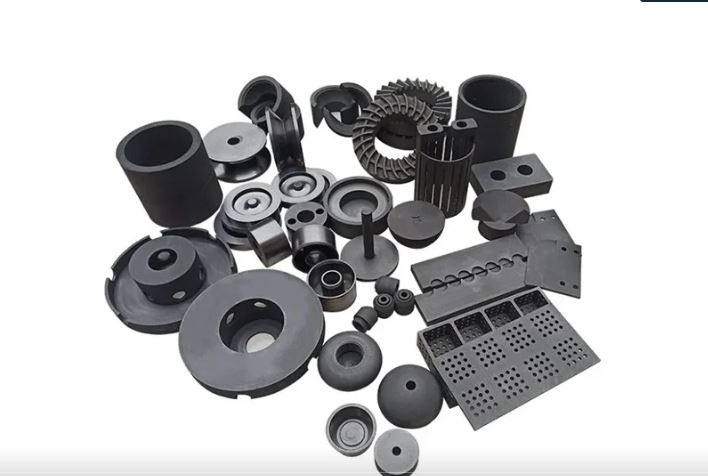
Custom graphite molds are machined graphite components designed according to specific production requirements. Instead of using a standard mold with predetermined dimensions, manufacturers can create cavities, channels, openings, and other features to match a customer’s part design.
This approach is particularly useful when components have unusual geometries or when production requires specific dimensions and tolerances.
Graphite can also be machined into detailed shapes, making it suitable for applications where conventional mold materials may be less convenient to work with.
Why Is Graphite Used for Molding?
One of graphite’s most useful characteristics is its performance at elevated temperatures. It can tolerate high-temperature environments and is used in various thermal processing and metalworking applications.
Graphite also has good thermal conductivity, allowing heat to move through the material efficiently. This can be useful when controlling cooling or heating during a manufacturing process.
Another important advantage is resistance to thermal shock. Manufacturing processes that involve rapid temperature changes can place considerable stress on mold materials, so thermal stability is an important consideration.
Precision and Dimensional Control
Custom manufacturing often requires close control over component dimensions. A mold that does not maintain its geometry can produce inconsistent parts and increase production waste.
Graphite is relatively easy to machine, allowing manufacturers to produce detailed cavities and controlled dimensions.
The final precision depends on factors such as graphite grade, machining equipment, tooling, design complexity, and the tolerances specified for the project.
Applications of Custom Graphite Molds
Custom graphite molds are used across several high-temperature industries.
Common applications include:
- Metal casting
- Jewelry and precious-metal casting
- Laboratory research
- Semiconductor processing
- Powder metallurgy
- Continuous casting
- Thermal processing
- Specialized component production
The appropriate graphite grade depends on the temperature, atmosphere, material being processed, and expected service life.
Choosing the Right Graphite Grade
Not every graphite material performs identically. Graphite grades differ in particle size, density, purity, strength, thermal properties, and other characteristics.
For demanding applications, purity may be particularly important. In other applications, mechanical strength or thermal conductivity may have greater importance.
Manufacturers should therefore select the material based on the actual operating conditions rather than choosing solely on price.
Design Considerations
Before manufacturing a custom mold, several factors should be reviewed.
Mold Dimensions
The cavity must match the required component dimensions and account for the production process.
Temperature
The expected operating temperature should be considered when selecting the graphite material.
Atmosphere
Vacuum, inert gas, air, and other environments can affect graphite performance differently.
Part Geometry
Complex cavities may require specialized machining strategies. Small openings, sharp features, and thin sections should be evaluated during the design stage.
Production Volume
A mold intended for occasional laboratory use may have different requirements from one used continuously in industrial production.
Why Customization Can Be Valuable
Standard molds can be useful for common production requirements, but they may not provide the exact geometry or dimensions needed for specialized components.
Custom molds allow manufacturers to optimize the design around the actual application. This can reduce unnecessary machining after casting and improve consistency between production cycles.
The ability to modify dimensions and cavity geometry can also make graphite suitable for prototyping and specialized manufacturing.
Graphite Components Beyond Molds
Graphite is used for more than molds. The material is also manufactured into plates, rods, crucibles, electrodes, and other components used in high-temperature environments.
For example, businesses that require heat-resistant flat graphite components can explore custom graphite molds alongside other graphite products to determine which solution best fits their application.
Final Thoughts
Custom graphite molds can provide manufacturers with a practical solution when precision, high-temperature performance, and specialized geometry are important.
The right mold depends on the application, including temperature, atmosphere, material being cast, required tolerances, production volume, and desired service life. Working with an experienced graphite manufacturer can help ensure that the mold design and graphite grade are appropriate for the intended process.
