
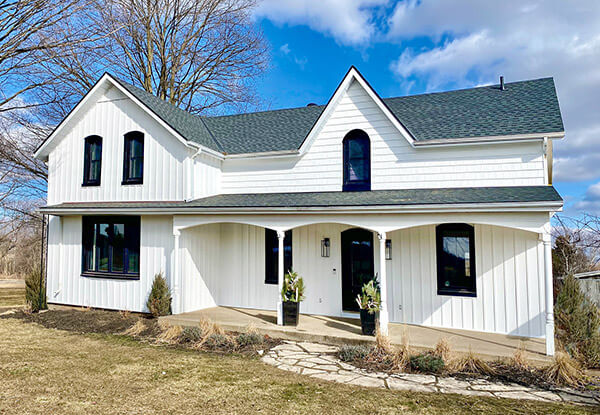
Thinking about siding replacement in London, Ontario? You’ll get practical options that suit local weather, budgets, and curb appeal — from vinyl and fiber cement to cedar and metal — and you can protect your home while improving energy efficiency. A well-chosen siding replacement both shields your house from Ontario’s rain, wind, and snow and lowers long-term maintenance and energy costs.
In this article Siding Replacement London Ontario You’ll learn which services local contractors offer, what to expect during installation, and how to pick a firm with the right experience and warranties for your project. Use that guidance to compare materials, timelines, and quotes so you can move forward with confidence.
Siding Replacement Services in London Ontario
You’ll find durable material options, a typical five-step replacement workflow, and local cost ranges to help plan your project. Expect decisions about material, insulation, and labour to drive the schedule and total price.
Types of Siding Available
Vinyl is common in London, Ontario for its low maintenance, moisture resistance, and lower upfront cost. It works well for most houses and comes in many colours and profiles; choose thicker gauges (e.g., 0.044″ or higher) for better wind and impact performance.
Cement fibreboard (Hardie) resists rot, fire, and freeze-thaw cycles and offers a long service life. It costs more than vinyl but provides a premium appearance and greater durability in Ontario’s climate.
Engineered wood and cedar give a natural look; cedar has good longevity if maintained, while engineered wood resists insects and moisture better. Metal siding (aluminum or steel) suits modern or industrial aesthetics and offers excellent wind resistance but can dent.
Consider insulation-backed systems or adding continuous rigid foam to improve your wall R-value and reduce thermal bridging. Ask contractors about warranty length, local installation experience, and sample panels before deciding.
Replacement Process Overview
Contractors commonly follow these steps: inspection, removal of old siding, substrate repair and weather barrier installation, new siding installation, and trim/finish work. Expect a detailed pre-work inspection for rot, mold, or sheathing damage; this dictates repair needs and cost.
Removal can reveal water damage that requires sheathing replacement or additional flashing. Install a proper house wrap and flashing around windows, doors, and eaves to prevent leaks.
Skilled crews use level lines and starter strips to ensure straight runs; proper nailing, spacing, and ventilation vary by material. Typical projects for an average 1,800–2,200 sq ft detached home take 3–7 days of on-site work, depending on repairs and weather.
Costs and Budget Considerations
Material choice drives most of the cost: vinyl typically ranges $4–$8 per sq ft installed, fibre cement $8–$14, cedar $10–$18, and metal $7–$15. Prices vary with profile complexity, trim details, and regional labour rates in London, Ontario.
Factor in removal and disposal ($500–$2,000), sheathing or structural repairs (variable), insulation upgrades ($1–$3 per sq ft for rigid foam), and permit or disposal fees. Warranties and labour guarantees can cost more up front but reduce long-term risk.
Get at least three written quotes that list material grades, fastening methods, insulation, and warranty terms. Request a timeline, payment schedule, and proof of insurance and WSIB coverage before you sign.
Choosing the Right Siding Contractor
You need a contractor who matches your project size, timeline, and budget while complying with local rules and backing their work with clear warranties. Focus on credentials, written estimates, permitting experience, and post-installation support when evaluating companies.
Factors to Consider
Verify licensing, insurance, and at least three local references before you hire anyone. Ask for a written estimate that breaks down material costs, labour hours, removal of old siding, disposal fees, and any roof or trim work; compare at least two bids to spot outliers.
Check experience with the specific material you chose (e.g., James Hardie fiber cement vs. vinyl), and request photos of completed jobs in London-area neighbourhoods with similar home styles and climates.
Confirm the crew that will work on your job — subcontractors or company employees — and get their expected schedule and daily start/finish times in writing.
Insist on a written contract with payment milestones tied to progress, not large upfront deposits, and include a clause for change orders and finish dates to avoid cost creep.
Local Regulations and Permits
Contact the City of London building department or a contractor who routinely pulls permits in London, ON to confirm permit requirements for siding replacement. Permits often depend on whether you’re replacing like-for-like or altering sheathing, insulation, or wall openings.
You must provide the municipality with a contractor’s licence and proof of liability insurance if required. If your home is in a conservation area or heritage district, you may need additional approvals for material type, colour, or trim details.
Ask the contractor to include permit fees and inspection scheduling in the estimate, and document who is responsible if an inspector requires remedial work.
Warranty and Aftercare
Request both manufacturer warranties for materials and a separate labour warranty from the contractor, with durations and scope stated in writing. Manufacturer coverage often protects against product defects but not installation errors; a labour warranty should cover defects in workmanship and water intrusion for a defined period.
Get instructions for routine maintenance, recommended cleaning methods, and approved caulks or sealants to avoid voiding warranties. Keep all receipts, warranty documents, and a photographic record of the project progress; these help with future claims or resale disclosures.
Clarify the contractor’s post-installation process: final walkthrough checklist, handling of touch-ups, timeline for warranty repairs, and emergency contact for storm damage.
